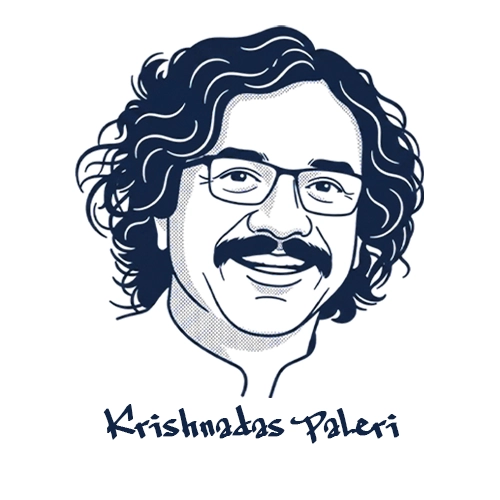
Mathematics Mentor for Teachers – Krishnadas Paleri
School Development Through Community Support
Krishnadas Paleri’s work in school and society shows how education becomes stronger when teachers, parents, local organisations, and community members work together for children. As a Mathematics Mentor for Teachers, he connected classroom needs with wider school development through PTA, Mother PTA, School Development Committee, parent feedback, home visits, admission campaigns, learning festivals, and community-supported resources. His efforts helped improve furniture, PA system, learning spaces, digital access, and basic facilities, making the school more responsive to children’s learning needs.
His work also reflects Education for Social Development, where school becomes a space for confidence, inclusion, responsibility, and public participation. During COVID, he supported learning through digital devices, WhatsApp classes, Google Meet, parent communication, and home-based learning support. Beyond academics, he encouraged awareness on nutrition, hygiene, health, gender equality, scientific temper, digital behaviour, national integration, and civic responsibility. Through these efforts, children learned that education connects with home, society, values, technology, culture, and everyday life.
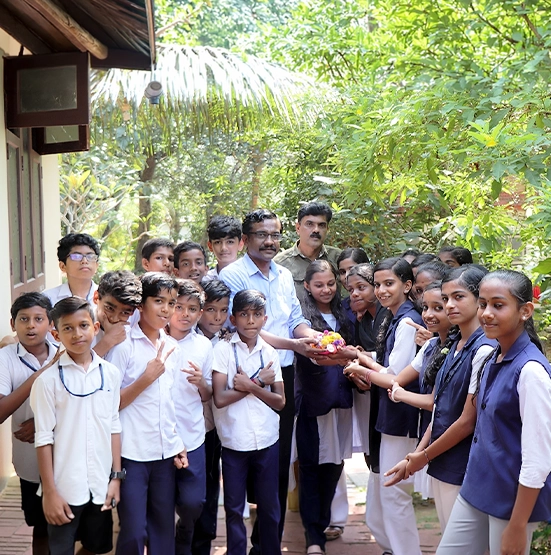
School Development & Community Support
School development became stronger when Krishnadas Paleri connected classroom needs with community support. He worked closely with PTA, Mother PTA, and the School Development Committee to improve the learning environment and make the school more responsive to children’s needs. His approach gave importance to practical requirements such as furniture, PA system, school facilities, learning spaces, and basic support systems that help children learn with comfort and dignity.
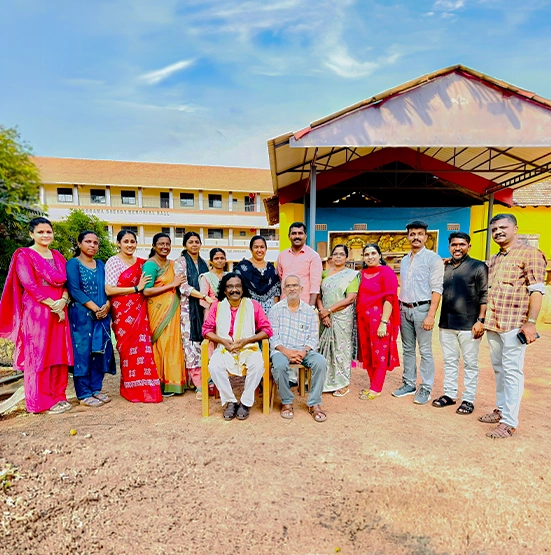
Through local organisations, parents, well-wishers, and community partners, he helped build a culture where the school was not seen as a separate institution, but as a shared responsibility. This support improved school infrastructure, encouraged parent participation, and strengthened trust between teachers and the public. His work shows how meaningful school development happens when teachers, parents, committees, and community members work together for children’s learning.
Enrolment, Retention & Parent Partnership
Keeping children connected with school needs trust, care, and constant communication with families. Krishnadas Paleri supported enrolment and retention through home visits, admission campaigns, learning festivals, brochures, and digital media that helped parents understand the value of school learning. He did not treat admission as a one-time process; he saw it as an ongoing relationship between children, parents, teachers, and the school.
His work also strengthened parent partnership through parent feedback, learning products, home-based activities, and regular school-community interaction. Families could see what children were learning, how they were progressing, and where support was needed. This helped reduce distance between home and school, especially for children who needed extra encouragement. Through practical communication and community involvement, he helped make school a familiar, welcoming, and meaningful space where children could continue learning with confidence, support, and belonging.
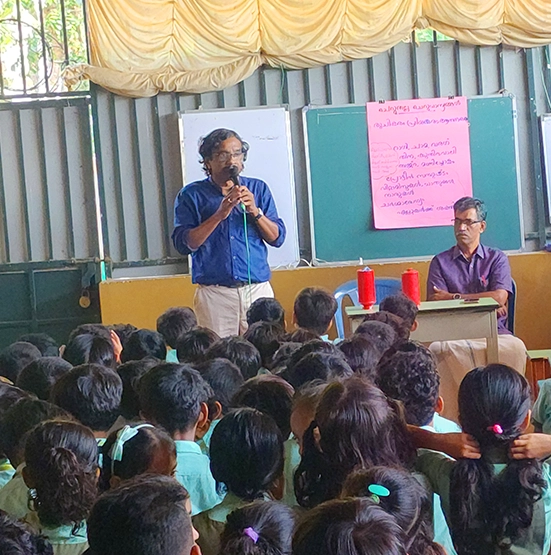
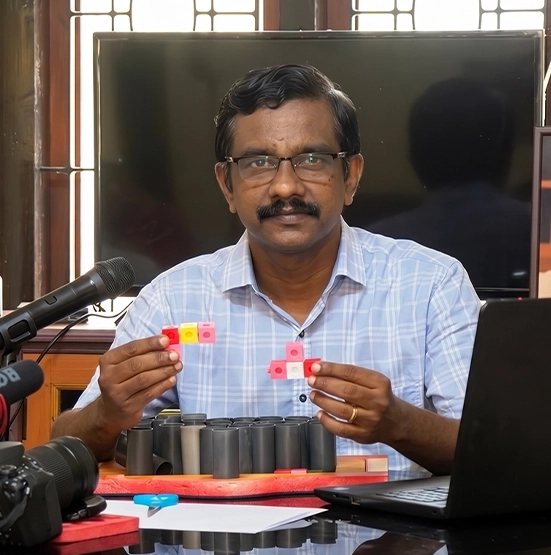
COVID Learning & Digital Support
He also used WhatsApp classes, Google Meet learning, digital communication, and home-based learning support to keep children connected with teachers. Lessons, activities, reminders, feedback, and learning materials reached families through simple digital channels. His work during this period showed that technology becomes useful only when it is joined with care, follow-up, parent support, and a clear responsibility to keep every child learning.
Social Awareness & National Integration
Social awareness became a regular part of Krishnadas Paleri’s school activities because he believed education should prepare children for life, not only examinations. Through programmes on nutrition, hygiene, health awareness, gender equality, scientific temper, and responsible digital behaviour, he helped children understand everyday choices with clarity. These activities encouraged students to think about their body, habits, relationships, environment, technology use, and social responsibility.
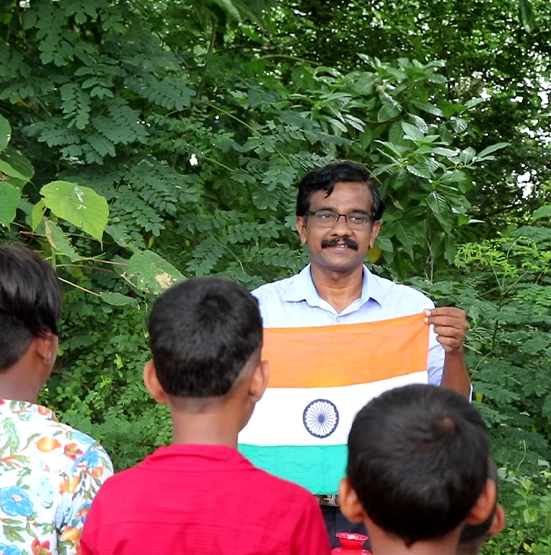
His work also strengthened national integration through national festivals, Gandhiji clips, patriotic songs, unity activities, and creative programmes such as Oru Bharatham Orooru Janam. Children learned that respect for the nation is built through peace, diversity, discipline, and shared responsibility. By connecting awareness activities with school life, songs, films, discussions, and public participation, he helped students develop civic sense, cultural respect, and confidence to become thoughtful members of society.
Public Education in Practice
This approach helped strengthen the relationship between school and society. Through PTA involvement, Mother PTA support, School Development Committee work, home visits, admission campaigns, learning festivals, resource mobilisation, and community participation, he helped create a school culture where every child could feel noticed and supported. Public education in practice means building conditions where learning is not limited to lessons, but shaped through trust, care, cooperation, practical support, and shared responsibility.
Years


Krishnadas Paleri’s Community Education
Parents, children, schools connected
Krishnadas Paleri’s work in school and society shows how education becomes effective when classroom learning is supported by parents, committees, local organisations, and community participation. As a Mathematics Mentor for Teachers, he understood that children need more than lessons; they need learning spaces, digital access, family support, confidence, and a school environment that responds to their needs. His work with PTA, Mother PTA, School Development Committee, home visits, admission campaigns, learning festivals, and COVID digital support helped strengthen the connection between school and community.
His contribution reflects Education for Social Development, where children learn responsibility through real school experiences, not only through textbook instruction. Programmes on nutrition, hygiene, health awareness, gender equality, scientific temper, digital behaviour, national integration, and civic values helped students understand their role in family, society, and public life. Schools, teachers, parent groups, education platforms, and community organisations can associate with Krishnadas Paleri for school development guidance, parent engagement, student awareness activities, digital learning support, and community-linked education programmes.