Best Math Teacher in India – Krishnadas Paleri
A Teacher Who Made Mathematics Visible
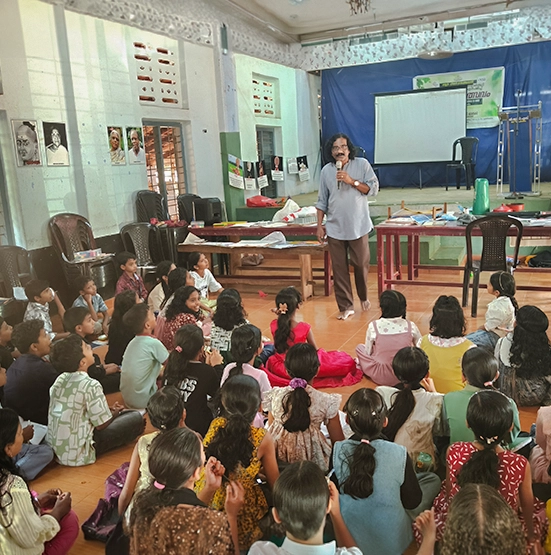
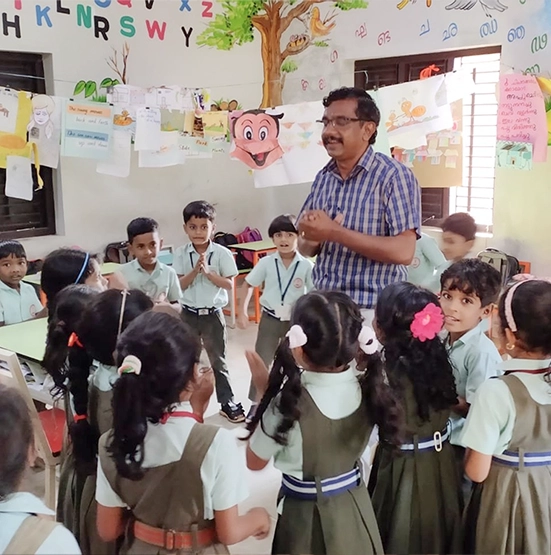
Krishnadas Paleri stands among Kerala’s respected names in Mathematics education, known for making numbers, patterns, measurement, and logic easier for children through visual Mathematics, Mathematics Labs, learning materials, puzzles, stories, films, field visits, and direct classroom activity. His work is relevant for searches around the best math teacher in India because it is rooted in long classroom practice, child-centred methods, teacher training, curriculum work, and public education. He helped children move from fear to participation by allowing them to observe, handle, discuss, repeat, and understand concepts at their own pace.
His identity extends beyond one classroom. As a Mathematics Mentor for Teachers, Krishnadas Paleri contributed to SCERT textbook work, NCERT graded learning materials, Mathematics camps, teacher training sessions, environmental field learning, and educational films. He connected school education with rivers, wetlands, sacred groves, community life, stories, art, and everyday experience. His journey presents a rare combination of Mathematics educator, environmental educator, teacher trainer, educational filmmaker, and public education contributor whose work continues to guide children, teachers, schools, and learning communities.
About
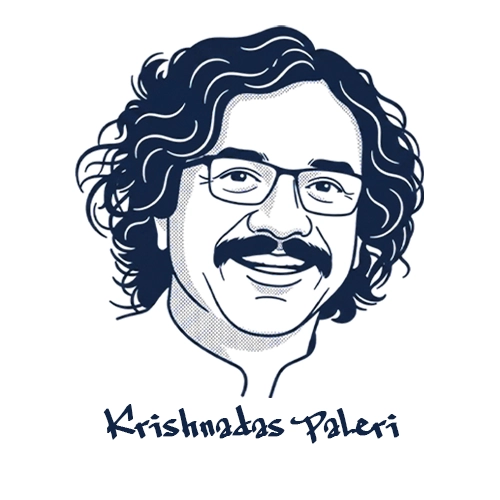
Krishnadas Paleri
Krishnadas P. is a primary teacher, Mathematics educator, teacher trainer, environmental educator, and educational filmmaker whose work is grounded in direct school experience. His teaching journey shows a clear focus on helping children understand lessons through activities, learning materials, observation, stories, field visits, and community support. In primary education, he gave special attention to children who needed patient guidance, visible methods, repeated practice, and confidence to participate in learning.
His academic identity is shaped by visual Mathematics, Mathematics Labs, curriculum contribution, teacher mentoring, environmental field learning, and films for education. His work moved across classrooms, Mathematics camps, textbook development, wetland studies, teacher training sessions, and school-community initiatives. Krishnadas Paleri’s contribution to public education can be seen in the way he made learning more practical for children, supported teachers with usable methods, and connected school education with nature, society, and everyday life.
Step Inside Top
Developments
Connect With Us
Early Life & Education
A teacher’s classroom begins much before the first lesson; it begins with the education, discipline, and training that shape how he understands children. Krishnadas P. built his teaching identity through school education, strong interest in Mathematics, and formal teacher preparation. His B.Sc. in Mathematics strengthened his understanding of numbers, patterns, measurement, logic, and problem-solving, which later became central to his work with primary children.
His professional preparation through TTC and B.Ed. Mathematics gave him the required pedagogic foundation for school teaching. These qualifications supported his work in primary education, visual Mathematics, activity-based learning, and classroom planning. He used his academic background to design learning materials, Mathematics Labs, remedial support, and child-friendly activities that helped children learn at different speeds. His education connected subject knowledge with practical teaching, making Mathematics easier to see, handle, question, and understand.
Educational Identity
He is also known as a teacher trainer, filmmaker, and public education contributor. Through teacher mentoring, Mathematics camps, educational films, documentaries, textbook work, and community-supported school activities, he extended his classroom experience to wider academic and social spaces. His work connects Mathematics, nature, children, teachers, and society through practical methods that can be seen, used, discussed, and continued.
My Teaching Philosophy
Career Timeline
From his first classrooms to GLPS Thalangara Padinhar, Krishnadas Paleri’s journey shows the growth of a teacher shaped by children, public education, and practical classroom work. Each school added a new layer to his contribution—Mathematics teaching, learning materials, teacher training, field learning, community support, and school development. This timeline records the major stages of his professional life, showing how classroom experience gradually expanded into wider educational service and continued public contribution.

1. AUPS Alanthatta — Early Teaching Foundation
At AUPS Alanthatta, Krishnadas Paleri formed his early classroom discipline, working closely with children, language, Mathematics, and primary learning needs. This stage shaped his attention to basic concepts, student behaviour, and practical teaching inside real school conditions.

2. GSBS Kumbala — Government School Experience
Service at GSBS Kumbala widened his exposure to Government school education, classroom diversity, and public school responsibilities. He worked with children from different learning backgrounds, strengthening his understanding of primary education, school systems, and the everyday demands of teaching.

3. GJBS Mugu — Primary Learning Practice
At GJBS Mugu, his focus on primary learning became stronger through activity-based teaching, basic learning support, and classroom practice. He worked on methods that helped young children understand lessons through materials, repetition, observation, and guided participation.

4. GHS Angadimugar — Wider Academic Exposure
His period at GHS Angadimugar gave him broader school-level exposure and space to develop his work in Mathematics, student participation, learning materials, and classroom-based methods. This stage strengthened his link between subject teaching and practical school activities.

5. GUPS Kodiyamma — Mathematics And Activities
At GUPS Kodiyamma, his work gave stronger attention to UP Mathematics, classroom activities, learning aids, and student-centred practice. Concepts were connected with materials, games, measurement, and participation, helping children see Mathematics as something they could handle and explain.

6. GJBS Peral — Child-Centred Classroom Work
His service at GJBS Peral deepened his focus on children’s learning difficulties, remedial support, visual methods, and patient classroom practice. He used simple materials and repeated activities to help children gain confidence in basic concepts and classroom participation.

7. SSA Trainer Service — Teacher Training Role
During his SSA trainer service, he moved from one classroom to wider teacher support. His work included teacher training, Mathematics resource preparation, classroom methods, and academic capacity building, helping other teachers use practical approaches with children.

8. GLPS Thalangara Padinhar — Community School Leadership
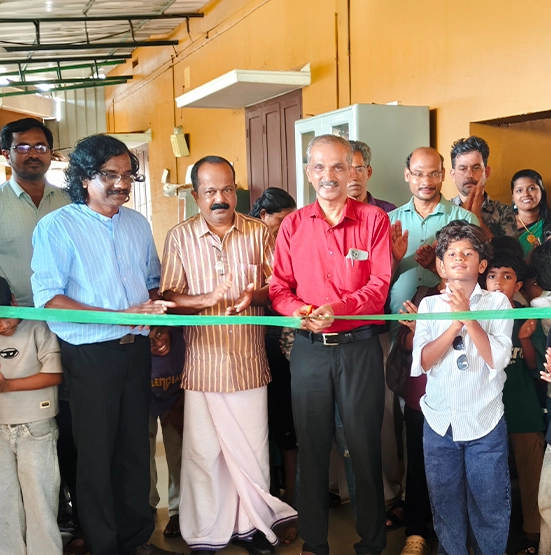
At GLPS Thalangara Padinhar, his work brought together Mathematics Labs, environmental learning, films, COVID digital support, parent partnership, and community-supported school development. This stage recorded his mature contribution to primary education until retirement.
Vision
To build learning spaces where children understand Mathematics, nature, and society through direct experience, patient guidance, and practical activity. Krishnadas Paleri’s vision is to support schools and teachers with methods that make concepts visible, reduce fear, encourage questions, and connect classroom learning with public life, environmental responsibility, creativity, and confident participation for every child inside schools that value inclusion, curiosity, and meaningful academic growth through daily shared responsibility.
Mission
To continue serving children, teachers, schools, and communities through visual Mathematics, activity-based learning, teacher mentoring, environmental education, educational films, books, and public learning programmes. The mission is to share classroom-tested methods, prepare useful learning resources, guide teachers, encourage field-based study, and help children learn with clarity, confidence, responsibility, and respect for life while connecting education with nature, society, creativity, and practical participation in everyday school life across Kerala.
Environmental Education
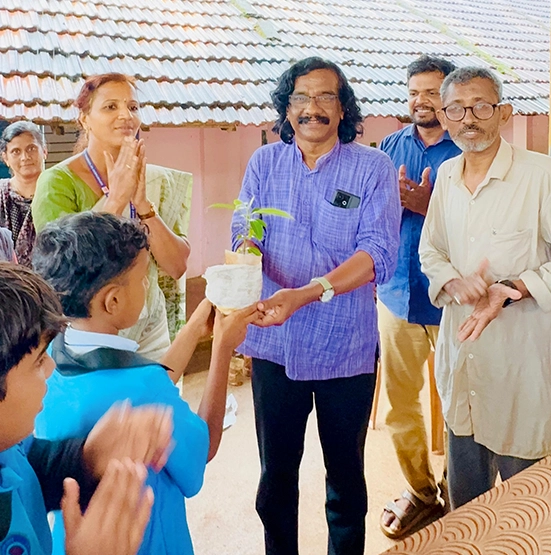
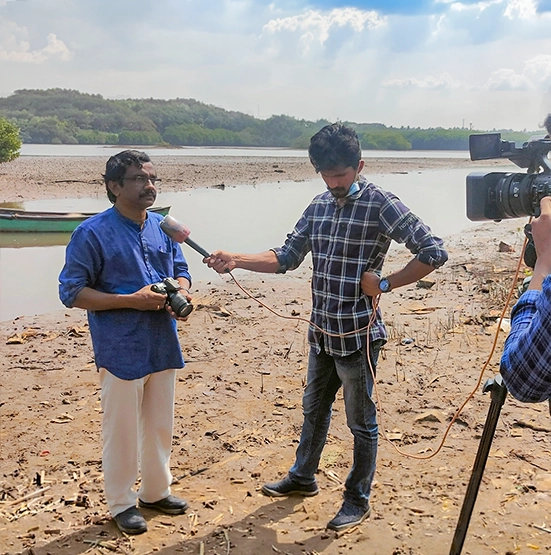
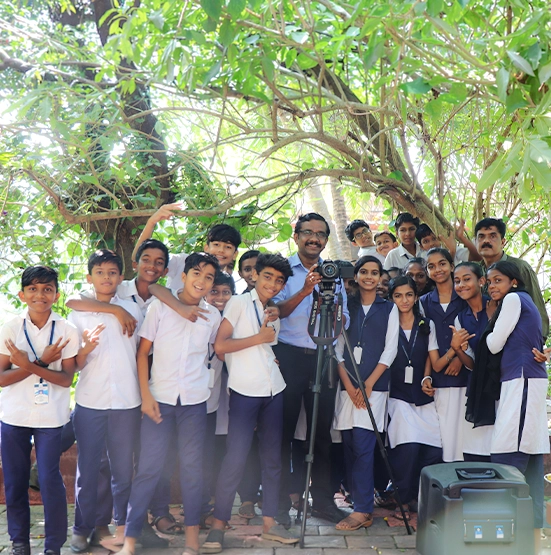
Through activities such as field visits, Eco Club work, wetland studies, sacred grove documentation, nature walks, conservation pledges, and environmental documentaries, he helped students understand how nature is linked with water security, biodiversity, culture, community life, and public health. A plant handed to a child, a river studied by students, or a grove documented by a school becomes a learning moment that teaches care, observation, and responsibility. His nature learning approach helped children see the environment as part of their own life.
Major Contributions
His work covers a wide range of public education practices, beginning with Mathematics education, visual learning, Mathematics Labs, puzzles, learning materials, and activity-based methods that help children understand concepts through direct participation. In classroom innovation, Krishnadas Paleri used storytelling, magic, games, group work, peer learning, and practical tasks to make children active in the learning process, not passive listeners.
His contribution also extends to environmental learning, films, teacher mentoring, curriculum work, and community-supported school development. Through wetland studies, sacred grove projects, field visits, and environmental documentation, he helped children learn from nature directly. His educational films, documentaries, and visual content supported language learning, value education, and social awareness. As a teacher trainer and curriculum contributor, he shared classroom-tested methods with other teachers, while his work with PTA, parents, local organisations, and school committees strengthened the connection between school, family, and community.
Mathematics Labs
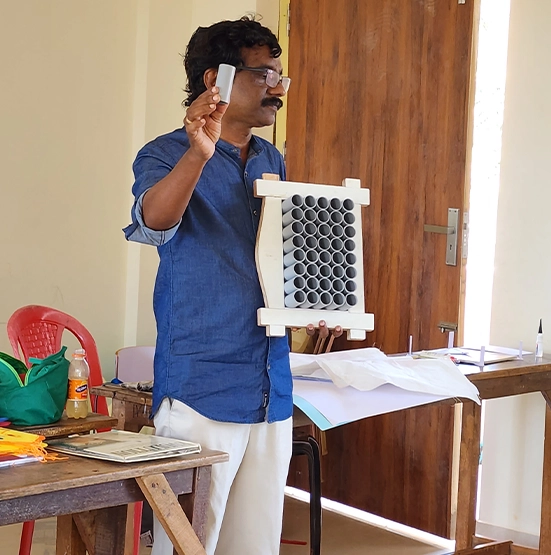
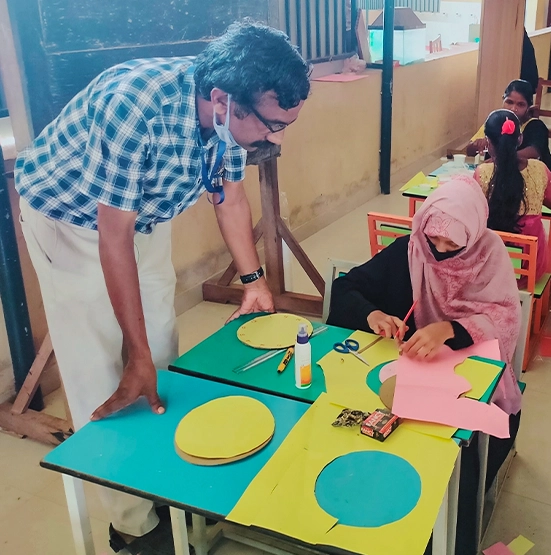
Created and promoted Mathematics Labs using learning materials, puzzles, place value kits, Jodo-cubes, and measurement tools, helping children understand Mathematics through handling, building, counting, comparing, and direct classroom activity.
Visual Mathematics
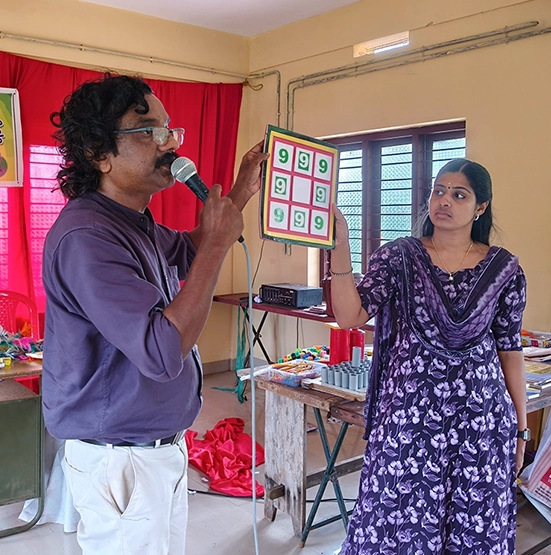
Developed visual Mathematics practices that made abstract ideas easier for primary children. Through objects, patterns, games, movement, and demonstrations, he helped children see concepts before moving into written steps and formal explanations.
SCERT Textbook Work
Contributed to SCERT textbook and handbook development, especially in Mathematics and related academic resources. His classroom experience supported content that helped teachers, children, activities, lesson flow, and concept-based learning.
NCERT Graded Materials
Participated in CIET–NCERT and RIE Mysore work connected with graded learning material. This contribution focused on children’s learning levels, concept clarity, gradual progress, assessment support, and child-friendly resource preparation for practical classrooms.
Teacher Training
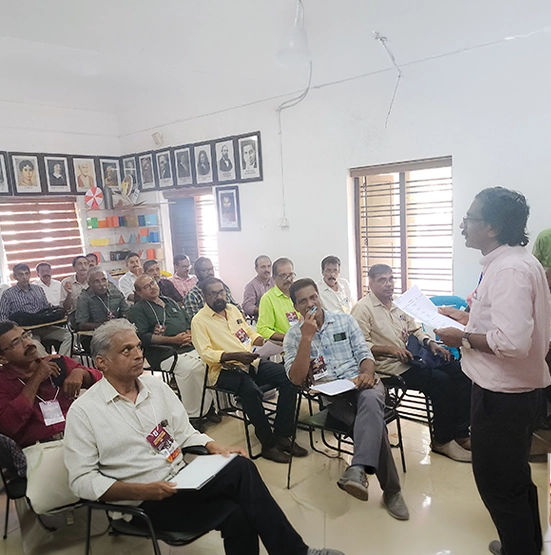
Worked as a teacher trainer and resource person, sharing practical methods in Mathematics, activity-based learning, learning materials, assessment, environmental education, and filmmaking, supporting teachers for real classrooms.
Wetland Studies
Led environmental learning through wetland studies, river observation, field visits, and student documentation. Projects connected with Chandragiri River and local ecology helped children understand water, biodiversity, conservation, and natural spaces.
Educational Films
Used films, documentaries, short films, and visual content for value education, language learning, environmental awareness, and classroom discussion. His film work helped children observe, think, speak, and respond with clarity through guided viewing sessions.
School-Community Initiatives
Strengthened school development through PTA, Mother PTA, community support, parent engagement, digital device support, and resource mobilisation, connecting school, family, and community to support children’s learning, facilities, enrolment, and participation.
Books And Writing
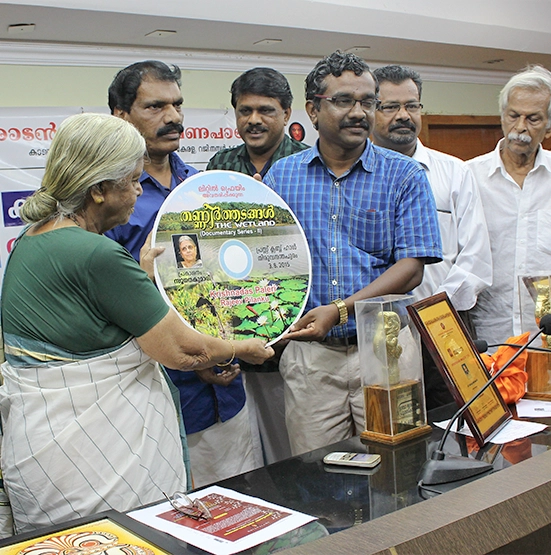
Extended his work through articles, field notes, scripts, and the environmental book Thanneerthadangal, connecting education, Mathematics, wetlands, nature awareness, public education, and classroom experience through meaningful written documentation.
Quick Facts
A brief profile can often reveal the depth of a long educational journey. Here, Krishnadas Paleri’s work is presented through his roles as a primary teacher, Mathematics educator, textbook contributor, environmental educator, teacher trainer, published author, and educational filmmaker. Each point highlights a specific part of his contribution, from 33 years of service and the Kerala State Teacher Award 2021 to his work in classrooms, curriculum, field learning, films, and public education.

33 Years Of Service
Dedicated service in school education and public learning spaces.

Primary Teacher
Focused on children’s learning, confidence, and classroom participation.

Mathematics Educator
Made Mathematics visible through labs, activities, and materials.

Kerala State Teacher Award 2021
Recognised by the Government of Kerala in the Primary category.

Textbook Contributor
Contributed to SCERT textbooks, handbooks, and academic resources.

Teacher Trainer
Supported teachers through training, mentoring, and classroom methods.

Environmental Educator
Led learning through wetlands, rivers, sacred groves, and fieldwork.

Educational Filmmaker
Used films, documentaries, and visual stories for learning, discussion, values, and awareness.

Published Author
Wrote Thanneerthadangal, focused on wetlands and nature awareness.

Community Education Worker
Connected school, parents, local groups, and children’s learning.
Films, Documentation & Public Education
Visual Documentation as a Learning Method
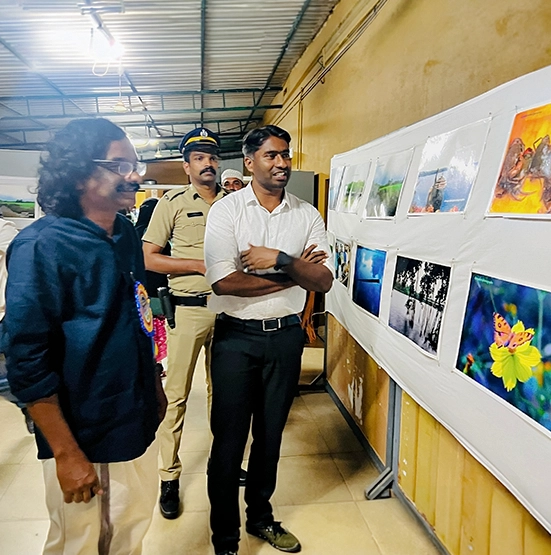
The presence of the District Collector gave wider attention to the educational value behind the exhibition. It recognised the importance of documenting nature studies, wetlands, sacred groves, classroom practices, public education efforts, and student-led observations. For Krishnadas Paleri, photography and documentation became part of teaching itself, helping students observe carefully, record honestly, and discuss what they see. The exhibition reflected how films, photographs, and field records can support meaningful learning and public awareness.
Awards & Recognition Summary

Kerala State Teacher Award — 2021
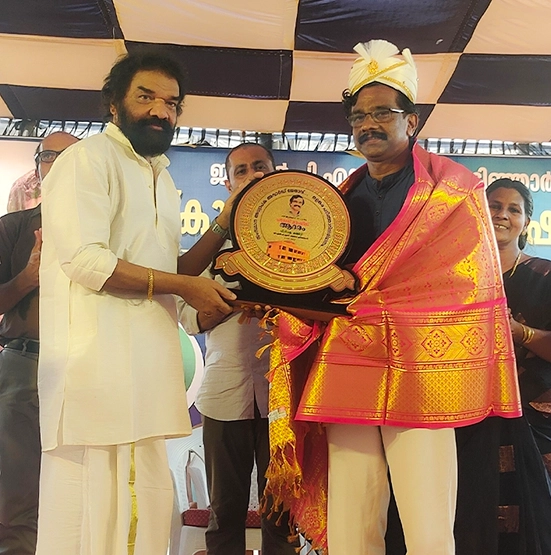
Received the Kerala State Teacher Award in 2021 in the Primary category from the Government of Kerala. This recognition records his work in child-centred teaching, visual Mathematics, activity-based learning, teacher training, and public education. It is relevant because it recognises classroom practice built through direct work with children.

Mathematics Association Appreciation — 2024
The Kasaragod Revenue District Mathematics Association appreciated his work in 2024, connected with Mathematics activities, district-level coordination, and student participation. This recognition is relevant because it records his role in supporting Mathematics fairs, teacher involvement, club activities, and wider Mathematics learning beyond his own classroom.

Educational Film Awards — 2007
His films received recognition at the Kerala State Children’s Educational Film Festival, including work connected with value education, language learning, children’s awareness, and classroom discussion. These awards are relevant because they show how film, story, and visual expression became part of his teaching method, not separate creative activity.

NCERT, SCERT & SSA Certificates — 2007
His NCERT, SCERT, and SSA certificates document his participation in textbook development, handbook preparation, graded learning material, teacher training, and resource work from around 2007 onwards. These recognitions are relevant because they show his contribution to academic material used beyond one school and across wider public education systems.

Vidyarangam Recognition — 2005
Recognition from Vidyarangam Kalasahithya Vedi reflects his contribution to literature, language activities, student expression, and cultural learning. It is relevant because his work was not limited to Mathematics; he also encouraged children to read, write, speak, observe society, and respond through meaningful creative participation.

Other Recognitions
Other recognitions, including the Ujala medal, film criticism awards, workshop certificates, appreciation letters, and testimonials, add further evidence to his educational journey. These are relevant because they document his work across Mathematics, films, writing, training, environmental education, and community-linked school activities over several years.
Life After Retirement
Retirement gives Krishnadas Paleri a wider space to continue the work that shaped his years in public education. His plans include educating children, supporting Mathematics learning, mentoring teachers, and helping young learners build confidence through activity-based methods, visual learning, and practical classroom experiences. He also intends to continue his environmental activism, especially around wetlands, rivers, sacred groves, local ecology, and conservation awareness. These efforts will connect children with nature through observation, documentation, field visits, and meaningful environmental learning.
His next phase also includes writing books, preparing educational materials, documenting field experiences, and sharing his ideas through academic and public platforms. The plan to present a paper at UN Geneva shows his intention to take local work in education and environmental conservation into wider conversations. For him, life after retirement means continuing through children, nature, writing, research, and public education, with the same attention to learning, responsibility, and community participation.
A Note Of Gratitude
My Learning Journey
When I look back at my years in teaching, I remember the faces of children more than any title or certificate. Their doubts, mistakes, questions, laughter, and small discoveries shaped my understanding of education. Mathematics taught me that every idea becomes clear when children are allowed to see, touch, compare, measure, and explain. Nature taught me that learning is not limited to the classroom; a river, a wetland, a plant, or a field visit can open a child’s mind in a powerful way.
My commitment to public education continues beyond service and retirement. I still believe that every child deserves patient teaching, useful materials, caring teachers, and a school connected with society. I wish to continue working through children’s education, Mathematics learning, environmental awareness, writing, and teacher support. Whatever I have learned from classrooms, nature, films, books, and communities, I want to share it further. Learning remains meaningful when it is passed on with care, responsibility, and respect for every child.
Years


Associate With Krishnadas Paleri
Join the Education Journey
Krishnadas Paleri’s journey shows how Mathematics education can become clearer when children are given methods they can see, handle, question, and practise. His work with visual Mathematics, Mathematics Labs, field learning, educational films, curriculum contribution, and teacher training continues to remain useful for schools, teachers, parents, students, and public education groups. For those searching for the best math teacher in India, this profile presents a teacher whose contribution is measured through classroom practice, children’s participation, teacher support, and learning materials shaped by real school experience.
Schools, teachers, education departments, training institutions, environmental groups, children’s organisations, and community collectives can associate with Krishnadas Paleri for Mathematics mentoring, teacher support, learning material development, educational films, environmental learning, field-based programmes, and public education initiatives. As a Mathematics Mentor for Teachers, he welcomes collaborations that support children’s confidence in learning, strengthen practical classroom methods, and build a stronger connection between school, community, nature, and public education.