Mathematics Educator in Kerala d – Krishnadas Paleri
Nature Notes from Mathemagician
Every blog here comes from the field, the classroom, or a real learning experience. Krishnadas Paleri writes about children, rivers, wetlands, sacred groves, Mathematics, films, school life, and public education in a way that is easy to read and useful to think about. His work connected with the Best Environmentalist in Kasaragod reflects years of observing nature with students and helping them understand the places around them.
This blog is for teachers, students, parents, Eco Clubs, and readers who care about learning beyond textbooks. Articles may include field notes, classroom ideas, environmental observations, Mathematics activities, documentary experiences, and reflections from public education. Each post can help readers see how nature, school, society, and children’s questions are closely connected.
Years
Why I Made Mathematics Visible
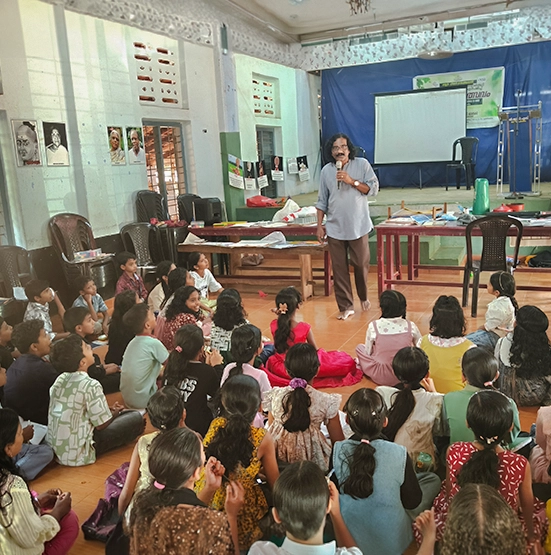
I am Krishnadas Paleri, a teacher from Kasaragod, Kerala, whose work has grown through Mathematics education, teacher mentoring, environmental learning, films, curriculum work, and public education. For many years, my classroom was not only a place for lessons; it was a space where children taught me how learning really happens.
I worked with children who were curious, silent, confident, hesitant, fast, slow, playful, afraid, and deeply observant. Some understood quickly. Some needed time. Some could solve a problem orally but struggled to write it. Some could copy every step from the board without understanding what they had written. These children shaped my teaching more than any textbook.
That is why I began to think seriously about one question: How can Mathematics become visible to a child before it becomes a written answer?


Thoughts From Real Experiences
Read, Reflect, and Share Your Thoughts
This blog is a space to read, pause, and think about how nature, children, schools, Mathematics, films, and public education meet in real life. Through the writings of Krishnadas Paleri, readers can follow ideas shaped by field visits, wetlands, sacred groves, classroom activities, student observations, and environmental learning. His work connected with the Best Environmentalist in Kasaragod shows how education becomes meaningful when children learn from the places around them.
Readers are invited to explore these articles and share their thoughts, questions, and experiences. A teacher, student, parent, Eco Club member, or nature lover may find something useful here. Each blog can open a small discussion on learning, environment, responsibility, and society, helping more people look at education through direct experience and careful observation.